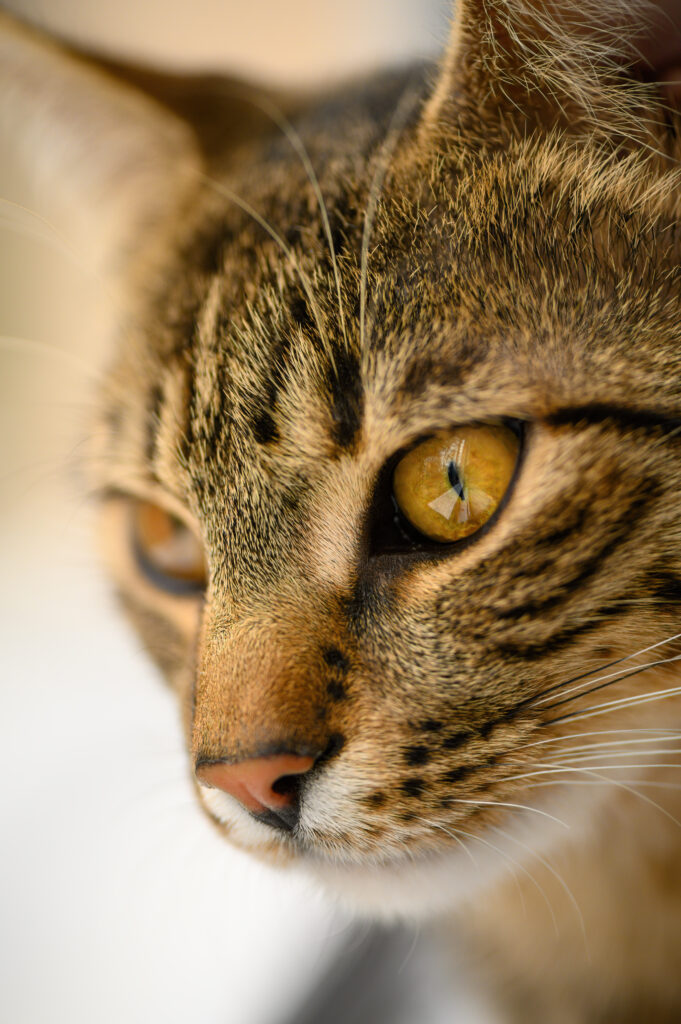
A small amount of clear or reddish-brown crust in the corner of a cat’s eye, especially in the morning, is usually normal. Discharge is not normal when it is green, yellow, thick, or constant, or when it comes with squinting, redness, swelling, or pawing at the face. Abnormal discharge in cats is most often caused by feline herpesvirus and other infections and deserves a veterinary exam rather than home treatment. Cats are tidy and stoic, so it is hard to know when “eye goop” is harmless and when it is a problem. Here’s how to tell.
What does normal discharge look like?
A healthy eye constantly makes a thin tear film, and a little of it can dry into a crust overnight. Normal discharge is small in amount; clear or reddish-brown (dried tears, not blood); easy to wipe away; and the same in both eyes, with no squinting or redness. That reddish-brown tint is just oxidized tears and is usually nothing to worry about in small amounts.
See the vet if you notice:
- Green or yellow discharge, which suggests infection
- Thick, sticky, or pus-like material, sometimes gluing the lids
- Constant watering that runs down the face and stains the fur
- Discharge in only one eye, especially if sudden
- Redness, squinting, swelling, or a held-shut eye
- Sneezing and/or nasal congestion at the same time
- The most useful question is simply: is this a change from my cat’s normal? If so, have it checked.
What causes eye discharge in cats?
The most common cause is infection, led by feline herpesvirus type 1 (FHV-1), a widespread virus and a primary cause of feline conjunctivitis and ocular surface disease. Herpesvirus can stay dormant and reactivate during periods of stress (new pets, boarding, moving, illness), which is why some cats have recurrent flare-ups.
Other causes include:
- Other infections, such as calicivirus, Chlamydia felis, and Mycoplasma
- Upper respiratory infections, often with sneezing and congestion
- Corneal ulcers, including the branching ulcers herpesvirus, can cause blocked tear ducts or flat-faced anatomy (Persians, Himalayans) that causes chronic tearing
- Foreign material, allergens, or irritants, common in outdoor Southwest Florida settings
- Veterinary ophthalmologists treat feline conjunctivitis as infectious until proven otherwise, which is one reason home steroid drops can be risky—they can worsen an undiagnosed viral ulcer.
Why does my cat keep getting eye discharge?
Recurrence is the hallmark of herpesvirus. Because the virus reactivates under stress, many cats have repeated bouts of conjunctivitis and discharge over their lives. Management focuses on reducing stress, treating flare-ups promptly, and ruling out ulcers; testing can help confirm what is actually going on.
Does Florida’s climate matter?
Indirectly, yes. Warm, humid weather and year-round outdoor exposure mean more contact with dust, sand, and pollen, which can inflame the eye surface, and multi-cat or indoor-outdoor lifestyles increase exposure to the viruses that cause conjunctivitis. Persistent or recurrent discharge in a cat in Fort Myers warrants investigation.
How is it treated?
Treatment depends on the cause, so diagnosis comes first. Whether it’s antiviral therapy for herpesvirus, antibiotics for bacterial involvement, lubrication for irritated surfaces, or specific care for an ulcer, we can get you the care your pet needs. Gentle cleaning with a warm, damp cloth keeps your cat comfortable but does not fix the cause. So, we recommend Refresh Liquigel Drops for eye lubrication. Never use leftover or human eye medications, which can make some feline eye conditions much worse.
References
- Stiles J. Ocular manifestations of feline viral diseases. Vet J. 2014;201(2):166-173. doi:10.1016/j.tvjl.2013.11.018
- Gould D. Feline herpesvirus-1: ocular manifestations, diagnosis and treatment options. J Feline Med Surg. 2011;13(5):333-346. doi:10.1016/j.jfms.2011.03.010
- Maggs DJ, Lappin MR, Reif JS, et al. Evaluation of serologic and viral detection methods for diagnosing feline herpesvirus-1 infection in cats with acute respiratory tract or chronic ocular disease. J Am Vet Med Assoc. 1999;214(4):502-507. doi:10.2460/javma.1999.214.04.502