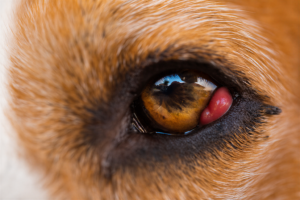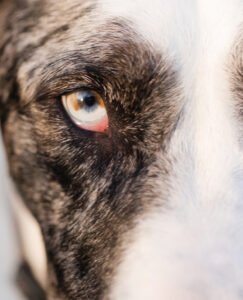
If you’ve noticed a cloudy film or dark pigment creeping across your dog’s eye, you’re right to pay attention. One possible cause is pannus—also known as chronic superficial keratitis (CSK)—a condition that can affect your dog’s vision over time if it’s not treated.
The good news? With early care and the right treatment plan, most dogs do very well.
So, What Exactly Is Pannus?
Pannus is a long-term (chronic) inflammation of the cornea—the clear surface of your dog’s eye. It usually shows up in both eyes and tends to worsen gradually if left untreated.
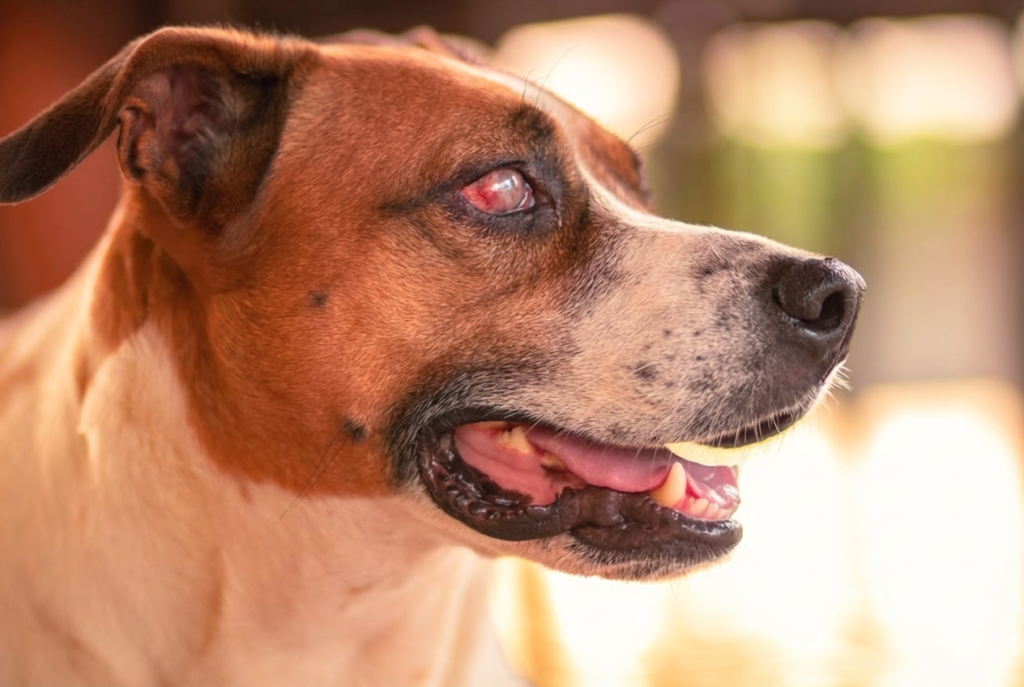
Instead of staying clear, the eye starts to develop:
- A pink or gray film
- Tiny blood vessels that grow across the surface
- Dark pigment that can slowly block vision
Why Do Dogs Get Pannus?
Pannus is considered an immune-mediated condition, which means your dog’s immune system is mistakenly targeting their own eye tissue. Genetics can play into this, too. It’s especially common in German Shepherds and similar breeds to have pannus. Sunlight is also a risk factor, so if your dog loves being outside—or lives somewhere bright, like Florida, year-round— that can also be a cause.
But the tricky thing about pannus is, it’s usually not painful, so dogs won’t necessarily act like anything is wrong.
How Visionary Vet Can Help
While pannus isn’t something we can cure, it’s very manageable. Most dogs do well with prescription eye drops to calm inflammation and immune-modulating medications—like cyclosporine or tacrolimus. These help control the immune response and keep the disease from progressing. In most cases, treatment is lifelong—but it becomes part of a simple routine. Surgical options exist depending on the case. We can help determine if medications are enough or if more aggressive approaches are needed for your pet.
Pannus is one of those conditions where catching it early makes a big difference. And once we know what we’re dealing with, we can create a plan to protect your dog’s vision long-term.
Give us a call or schedule an appointment so we can help your furry friend out.
References:
- Bedford PG, Longstaffe JA. Corneal pannus (chronic superficial keratitis) in the German shepherd dog. J Small Anim Pract. 1979;20(1):41-56. doi:10.1111/j.1748-5827.1979.tb07019.x
- Nell B, Walde I, Billich A, Vit P, Meingassner JG. The effect of topical pimecrolimus on keratoconjunctivitis sicca and chronic superficial keratitis in dogs. Vet Ophthalmol. 2005;8(1):39-46. doi:10.1111/j.1463-5224.2005.04062.x
- Research in Veterinary Science. Histological and immunohistochemical evaluation of canine chronic superficial keratitis. Res Vet Sci. 1999;67(2):191-195. doi:10.1053/rvsc.1999.0329