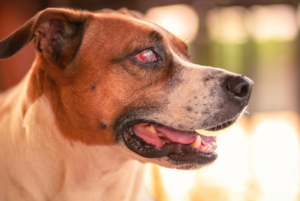
Florida pets love the beach—but salt spray, wind-blown sand, strong sun, and seasonal allergens can irritate or injure their eyes. What you need is a quick, practical guide to keeping your dog’s eyes safe so you can enjoy the sun without worry.
Why Florida is different
Beaches and boat days mean more saltwater, grit, and reflected UV. Algae, pollen, and wind make eyes more vulnerable to conditions such as conjunctivitis, corneal abrasions, foreign bodies, and infections.
Quick prevention tips
- Rinse after swims: Flush your dog’s face and eyes with fresh water or sterile saline after beach or pool time.
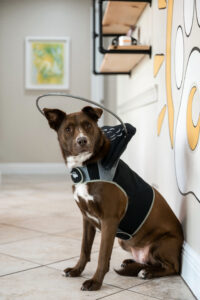
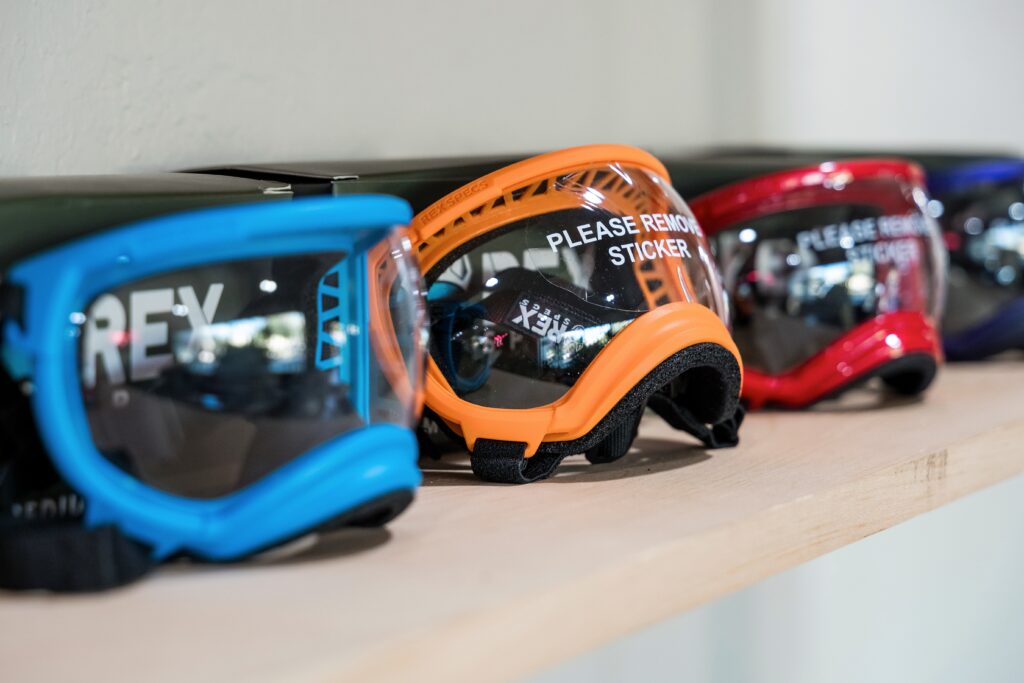
- Buy our dog goggles: Rex Specs. They protect against sand, spray, and UV. They’re great for boats and windy beach days.
- Steer clear of discolored or foamy water (algae) and stagnant pools.
- Trim their hair around the eyes. It keeps debris from getting trapped and reduces irritation.
- Early-morning or late-afternoon walks can reduce UV exposure.
- First-aid essentials to carry
- Sterile saline, clean cloths, dog-safe eye lubricant, and your veterinary ophthalmologist’s contact information. If sand or a foreign object gets in the eye, gently rinse with saline and do not rub.
Seek prompt care if your pet:
- Keeps the eye tightly closed or constantly paws at it
- Has green/yellow discharge, visible corneal clouding, or bleeding
- Shows sudden vision loss or intense pain
- Has an embedded foreign object or prolonged irritation after rinsing
- What you can do: take your pet to a board-certified veterinary ophthalmologist
- Expect an eye exam with fluorescein staining for scratches, topical meds (antibiotics, pain control, and a referral to a veterinary ophthalmologist
So, are you heading to the beach? If you spot redness, persistent squinting, or discharge, give us a call right away.