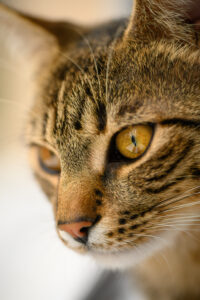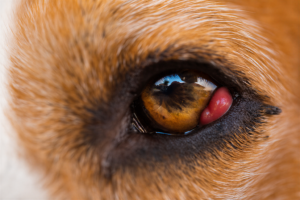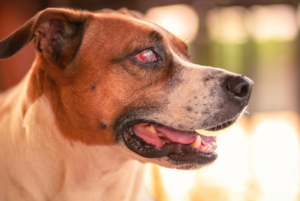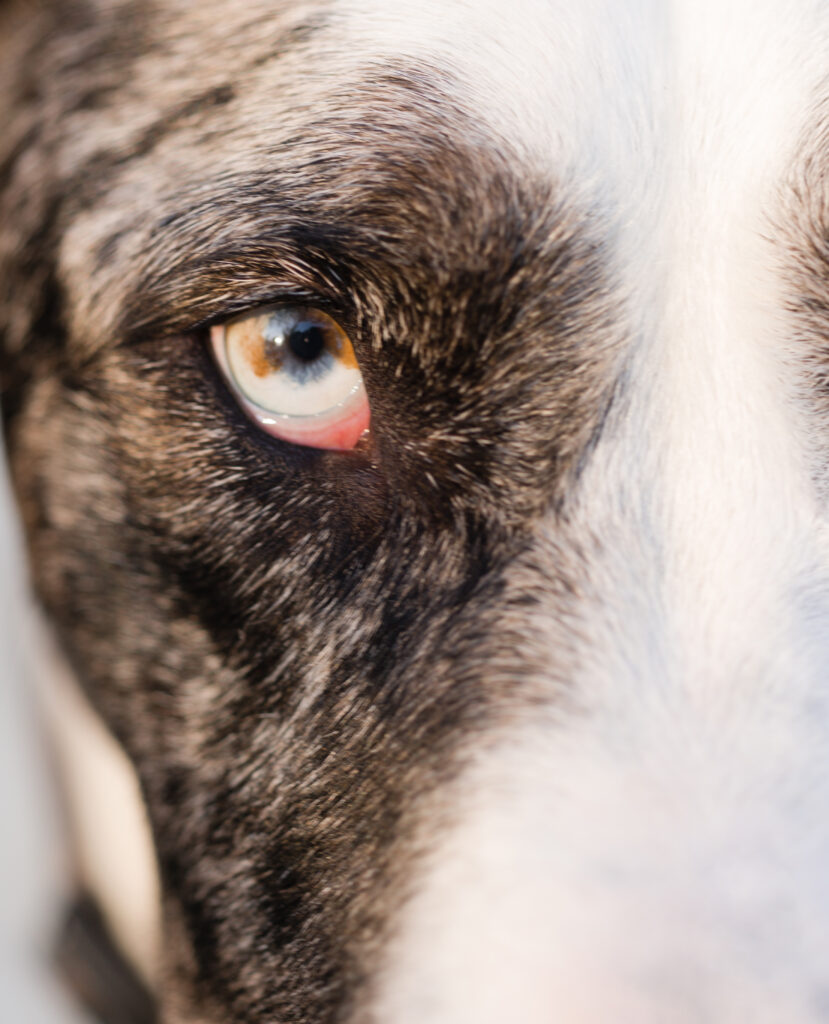
A little redness in one eye that clears within a day, with no other symptoms, is usually minor. Treat eye redness as urgent if it comes with squinting, pawing, cloudiness, a dilated or uneven pupil, discharge, or any sign of vision loss. These symptoms can signal glaucoma, uveitis, or a corneal ulcer, which are conditions that can permanently damage vision if they are not treated quickly. When in doubt, have the eye examined the same day.
Redness is one of the most common reasons pets are seen for an eye problem, and most causes are manageable. The trouble is that a minor red eye and a sight-threatening emergency can look almost identical. Here is how to tell the difference.
What does a red eye mean?
“Red eye” simply means inflamed or engorged blood vessels in or around the eye, it’s a symptom. Not a diagnosis. The most important causes are:
- Conjunctivitis – inflammation of the lid lining from allergies, irritants, infection, or dry eye; usually the least dangerous.
- Corneal ulcers – injuries to the clear surface of the eye, which are painful and can worsen quickly.
- Anterior uveitis – inflammation inside the eye that can signal a body-wide illness.
- Glaucoma – dangerously high pressure inside the eye and a leading cause of irreversible blindness in dogs.
- Dry eye – too few tears, leaving the surface red, irritated, and prone to thick discharge.
Because these look alike, a painful or persistent red eye should be examined rather than waiting it out.
When is a red eye an emergency?
Call your veterinarian or an ophthalmologist the same day if redness comes with any of these:
- Squinting, hard blinking, or holding the eye shut
- Pawing or rubbing at the eye
- A cloudy, hazy, or blue-tinged cornea
- A pupil that is larger than the other or unresponsive to light
- Swelling, bulging, or a change in the eye’s size or shape
- Yellow or green discharge, or any sign of lost vision
Glaucoma shows why speed matters: when eye pressure rises, the optic nerve can be damaged within hours, and vision lost in a crisis often cannot be recovered. A red eye with pain or vision change is never a “wait-and-see.”
Are some pets more prone to red eyes?
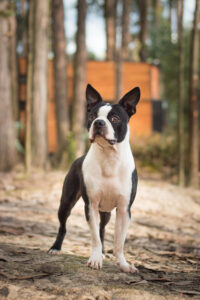
Yes. Brachycephallic or ‘Flat-faced breeds’, like Bulldogs, Pugs, Boston Terriers, Shih Tzus, and Persian cats are built in a way that exposes more eye surface and they experience chronic ocular surface problems at higher rates. In cats, redness is often viral: feline herpesvirus is a leading cause of conjunctivitis and can flare repeatedly during stress.
Does living in Southwest Florida matter?
It can. Fort Myers pets spend most of the year outdoors, with more exposure to sun, wind-blown sand, dust, and pollen. Trapped debris and grass-seed scratches are real local causes of sudden redness, and year-round allergens keep allergic conjunctivitis active. A red eye in a Florida pet deserves a careful look for foreign material or surface injury.
What will an eye exam involve?
A thorough workup is quick and painless. Your veterinarian will usually measure tear production, apply a fluorescein stain to reveal scratches or ulcers, check the pressure inside the eye, and examine the eye under magnification. This sequence is designed to catch glaucoma, ulcers, and internal inflammation before they threaten sight. Avoid using leftover or over-the-counter drops without a diagnosis—steroid drops, for example, can badly worsen an undiagnosed ulcer.
Talk to a Fort Myers eye specialist
Most red eyes are minor, but the ones that are not can cost your pet its sight. If your dog or cat has a red eye that will not resolve or looks painful, contact Visionary Vet Services in Fort Myers for a prompt evaluation.
References
- Komáromy AM, Bras D, Esson DW, et al. The future of canine glaucoma therapy. Vet Ophthalmol. 2019;22(5):726-740. doi:10.1111/vop.12678
- Sebbag L, Sanchez RF. The pandemic of ocular surface disease in brachycephalic dogs: the brachycephalic ocular syndrome. Vet Ophthalmol. 2023;26(Suppl 1):31-46. doi:10.1111/vop.13054
- Stiles J. Ocular manifestations of feline viral diseases. Vet J. 2014;201(2):166-173. doi:10.1016/j.tvjl.2013.11.018