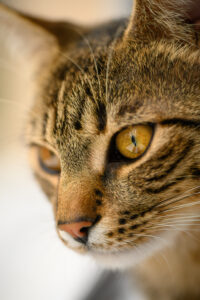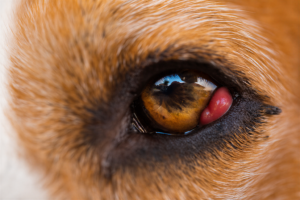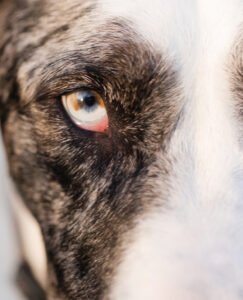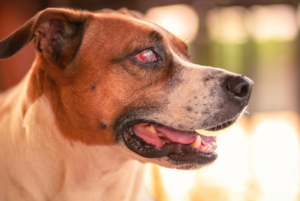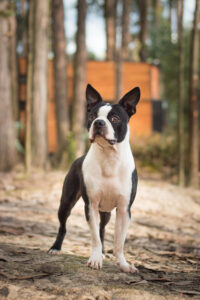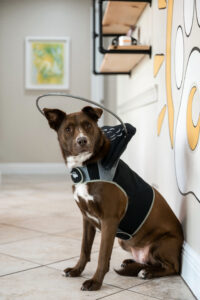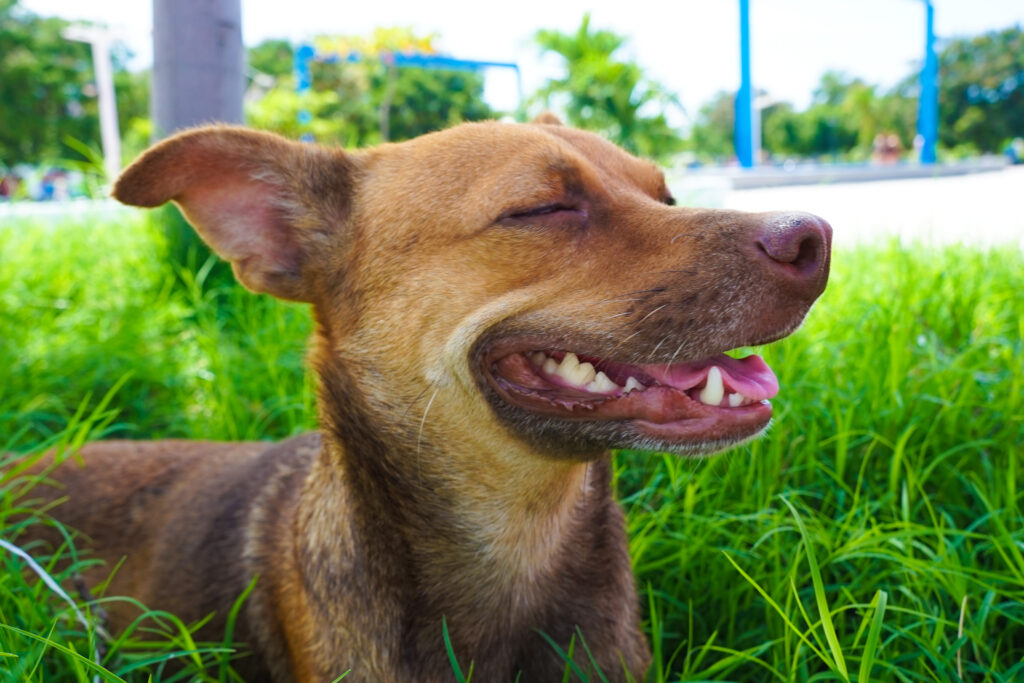
If your furry friend suddenly starts squinting, it’s usually a sign their eye is irritated or painful. Even if they seem otherwise fine, eye issues can escalate quickly. So it’s something you don’t want to ignore.
What Squinting Usually Means
Squinting, or blinking more than usual, is your dog’s way of protecting their eye.
You might also notice:
- One eye is more closed than the other
- Tearing or discharge
- Pawing at the face
- Sensitivity to light
Common Causes
A few of the most likely reasons include:
- Debris in the eye (like dust or grass)
- Corneal ulcers (scratches) — a very common and painful cause¹
- Infections or inflammation
- Dry eye, which leads to irritation over time²
- Eyelid issues like inward-rolling lids
- Glaucoma, a more serious condition involving pressure in the eye³
Some of these are mild, but others need quick treatment to protect your dog’s vision.
When to Call the Vet
It’s best to have your furry friend checked if you notice:
- Squinting that lasts more than a few hours
- Redness, cloudiness, or discharge
- Rubbing or pawing at the eye
- Eye problems don’t usually resolve on their own, and delays can make things worse.
Sometimes it’s something simple. Sometimes it’s not. Getting your dog’s eyes checked early is the best way to keep your dog comfortable and protect their vision.
References
- Gelatt KN, Gilger BC, Kern TJ. Diseases and surgery of the canine cornea and sclera. In: Veterinary Ophthalmology. 5th ed. Wiley-Blackwell; 2013.
- Nell B, Walde I, Billich A, Vit P, Meingassner JG. The effect of topical pimecrolimus on keratoconjunctivitis sicca in dogs. Vet Ophthalmol. 2005;8(1):39-46. doi:10.1111/j.1463-5224.2005.04062.x
- Gelatt KN, MacKay EO. Prevalence of primary glaucoma in purebred dogs in North America. Vet Ophthalmol. 2004;7(2):97-111. doi:10.1111/j.1463-5224.2004.04003.x