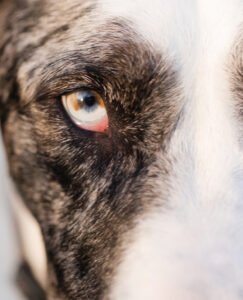
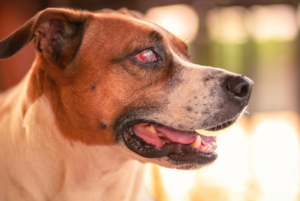
So, your pet’s eyes are starting to look a little different. What’s up with that? Your furry friend could have a cataract—an opacity within the lens of the eye. This can be due to age, genetics, diabetes, and other inherited causes, and they are way more common than you would think.
Spotting them isn’t always easy. Is your pet showing any of these signs?
- A cloudy or bluish tint in one or both eyes
- Bumping into furniture or door frames
- Hesitating on stairs or in unfamiliar places
- Trouble finding toys or treats
- More glare or shine in the eyes in photos
- Acting cautiously
When you bring your pet in, a veterinary ophthalmologist will determine whether surgery is the best course of action. Surgery is not always the best course of action for your pet. Sometimes, we can recommend treatment of your pet’s cataracts with topical drops that help reduce inflammation and long-term monitoring for secondary complications. If we’ve decided that surgery is right, we’ll go through these steps below:
- Confirm that your pet has good overall health and can undergo anesthesia. If needed, additional tests, such as chest X-rays or an echocardiogram, may also be recommended.
- Determine if surgery is the right option for your pet’s cataracts. Presurgical retinal testing is performed. If your pet passes all testing, then it’s time for surgery.
- After surgery, your pet will wear an Elizabethan (E-collar) collar/cone for 2–3 weeks and need to reduce activity for 3–4 weeks.
- Come in for follow-up visits at 1 day, 1 week, 2 weeks, 1 month, 3 months, 6 months, and 1 year.
- We’ll prescribe multiple topical and oral meds to prevent infection, inflammation, and other complications.
- Regardless of whether surgery is performed or not, there are risks to be aware of. Complications from cataracts can include glaucoma, retinal detachment, or inflammation.
If you think your pet has cataracts, let’s talk in person.