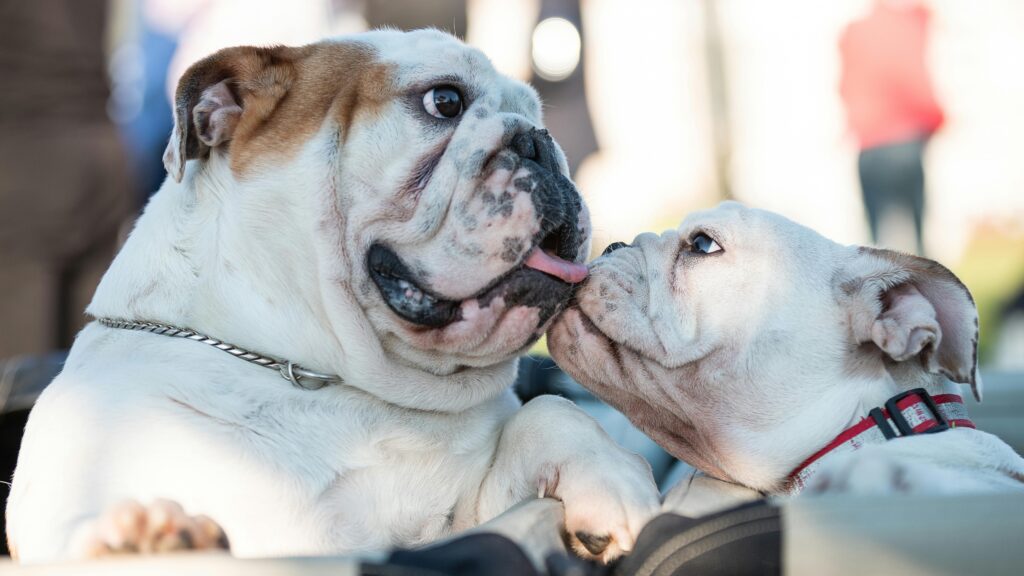
Some dogs need a little more eye TLC than others.
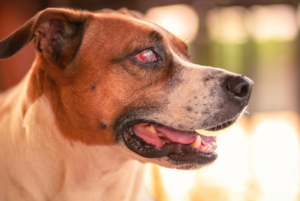
If you’ve ever owned a Frenchie with chronic tearing, a Shih Tzu with squinty eyes, or a Cocker Spaniel who seems prone to eye infections, you’re not imagining it. Certain dog breeds are genetically predisposed to eye conditions.
Now let’s talk about which breeds need a little extra attention and why.
Flat-Faced Breeds, Including:
- French Bulldogs
- English Bulldogs
- Pugs
- Shih Tzus
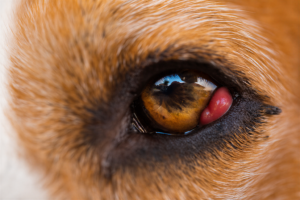
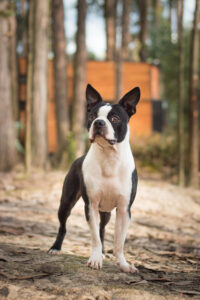
These breeds have shallow eye sockets and prominent eyes, which makes them more prone to corneal ulcers, dry eye, and cherry eye.¹ Their eyelids may not fully close, and tear film evaporation can happen more quickly, especially in warm climates like Southwest Florida.
Cocker Spaniels
Cocker Spaniels are wonderful, soulful dogs. But they’re also more likely to get cataracts, glaucoma, and dry eye.² Chronic inflammation can also lead to secondary eye changes if not monitored closely.
Miniature & Toy Poodles
Poodles are smart and athletic, but they carry a genetic risk for progressive retinal atrophy (PRA), a degenerative retinal disease that can lead to vision loss.³ Early screening matters, especially for breeding lines.
Collies & Related Breeds
Collies, Shelties, and Australian Shepherds can be affected by Collie Eye Anomaly (CEA), a congenital condition involving abnormal retinal development.⁴ Some cases are mild, but others can significantly impact vision.
Early Detection is Key
Many eye diseases start subtly with mild redness, extra tearing, or occasional squinting, which are all easy-to-dismiss symptoms. But early detection can prevent pain, preserve vision, and reduce the need for more invasive treatment later. Research consistently shows that breed-associated ophthalmic diseases are common and often inherited, making proactive screening essential.¹-⁴
The Bottom Line
If your dog belongs to one of these higher-risk breeds, it doesn’t mean something will go wrong, it just means their eyes deserve a little extra attention.
Regular eye exams allow us to catch problems early, protect tear production, monitor retinal health, and keep your dog comfortable for years to come.
Ready to be proactive?
Schedule a comprehensive eye exam with our team today and learn more about breed-specific eye care HERE (link TK).
Because when it comes to vision, earlier is always better.
References
- Gelatt KN, et al. Veterinary Ophthalmology. 5th ed. Wiley-Blackwell; 2013.
- Gelatt KN, Mackay EO. Prevalence of primary breed-related cataracts in dogs. Vet Ophthalmol. 2005;8(2):101-111.
- Petersen-Jones SM. Progressive retinal atrophy in dogs. Vet Clin North Am Small Anim Pract. 1998;28(6):1499-1521.
- Bedford PG. Collie eye anomaly in the dog. J Small Anim Pract. 1982;23(1):1-14.