Causes, Signs, and Treatment Options
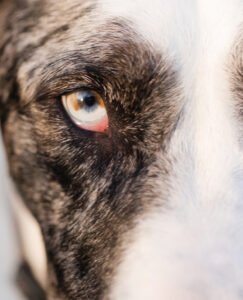
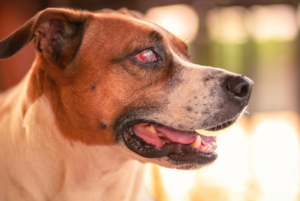
If your dog’s eye looks cloudy or blue, your dog may have been diagnosed with corneal endothelial cell degeneration. While the name sounds intimidating, this age-related eye condition is common in dogs and can often be managed to keep your pup comfortable.
What Is Corneal Endothelial Cell Degeneration in Dogs?
With corneal endothelial cell degeneration, corneal cells slowly die off. This condition is most often age-related, but it can also develop after eye inflammation, trauma, or immune-mediated disease. Because endothelial cells do not regenerate, fluid begins to build up in the cornea, causing a cloudy, hazy, or bluish appearance. As fluid accumulation worsens, small blisters called bullae may form. If these rupture, they can lead to painful corneal ulcers. While the degeneration itself is not painful, ulcers can cause significant discomfort.
Signs of Corneal Endothelial Degeneration in Dogs
Common signs include:
- Cloudy or blue-gray appearance of the eye
- Increased tearing or eye discharge
- Squinting or blinking (often a sign of a corneal ulcer)
- Sensitivity to light
Treatment Options for Corneal Endothelial Degeneration
- Tear-stimulating medications such as cyclosporine or tacrolimus to support corneal health and reduce inflammation
- Hypertonic saline ointment or drops to draw excess fluid out of the cornea and reduce blister formation
Surgical Treatment
Surgery may be recommended for dogs with recurrent or non-healing corneal ulcers. Recovery typically takes 2–4 weeks, and the appearance of the eye will change.
- Thermokeratoplasty uses controlled heat spots to reduce corneal swelling and help ulcers heal. Repeat treatments may be needed.
- Gunderson grafts place conjunctival tissue over the cornea to help draw out fluid and protect the eye surface.