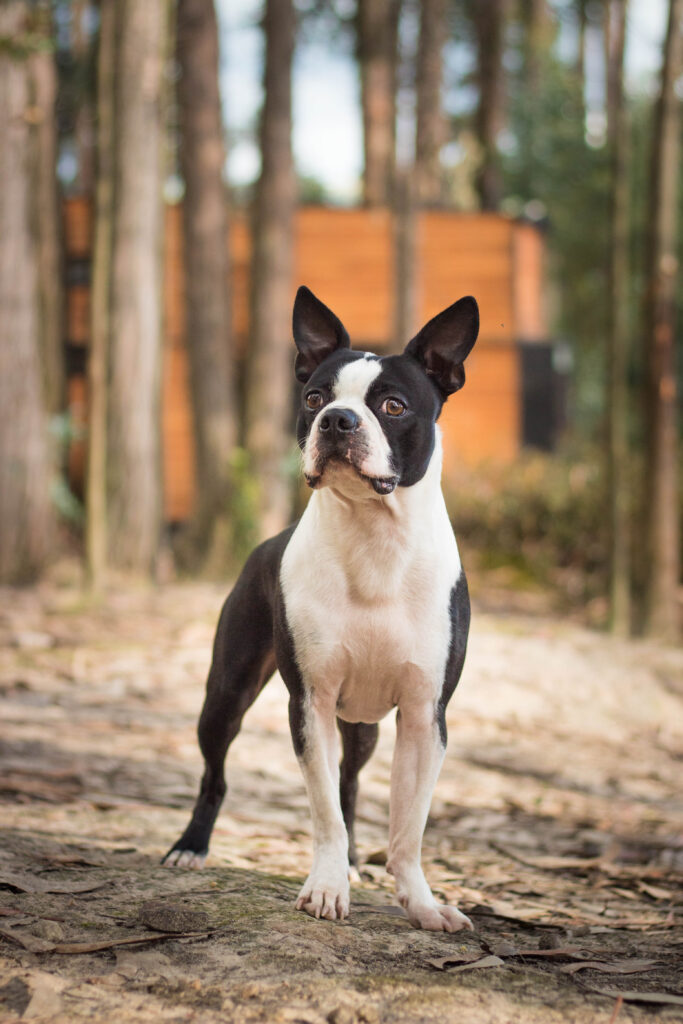
If you have a Boston Terrier, you already know they’re basically professional charmers. Those wide eyes, expressive faces, and their endless personality? It’s my favorite thing as a veterinary ophthalmologist to see when you walk through my front doors.
But here’s something many pet parents don’t realize: Boston Terriers are more likely to develop hereditary cataracts than many other dog breeds, and knowing this early on can make a huge difference.
So, what exactly are cataracts?
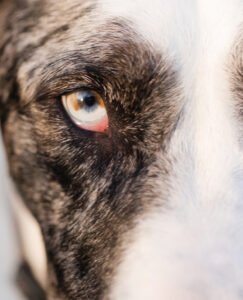
Cataracts happen when the clear lens inside your dog’s eye becomes cloudy, kind of like looking through a foggy window. Over time, that cloudiness can interfere with vision and may even lead to blindness if left untreated.
In Boston Terriers, cataracts often show up earlier than you’d expect, sometimes when dogs are still quite young. Because the change can be gradual, many pet owners don’t notice until their pup starts hesitating on stairs or bumping into furniture.
Why are Boston Terriers more at risk?
Short answer: genetics. Boston Terriers have a known inherited tendency toward cataracts, with studies showing a higher rate than the general dog population. A specific gene mutation can cause cataracts to develop earlier in life—and it often affects both eyes.
The key thing to remember? This isn’t something you caused, and it doesn’t mean your dog can’t live a happy, playful life.
What can you do right now to protect your Boston Terriers’ vision?
The best first step is routine eye exams, especially if your dog is young or showing subtle vision changes. A veterinary ophthalmologist can detect cataracts early and talk with you about monitoring, treatment options, or surgery if needed.¹
Make an appointment with us today. Your Boston Terrier deserves to see everything, especially those treats.
- Universities Federation for Animal Welfare. Boston Terrier – Hereditary Cataract. UFAW Animal Welfare Information. https://www.ufaw.org.uk/dogs/boston-terrier—hereditary-cataract